What Is Energy? A Physics-Based Explanation of a Fundamental Concept
Energy Definition: What Is Energy in Physics?
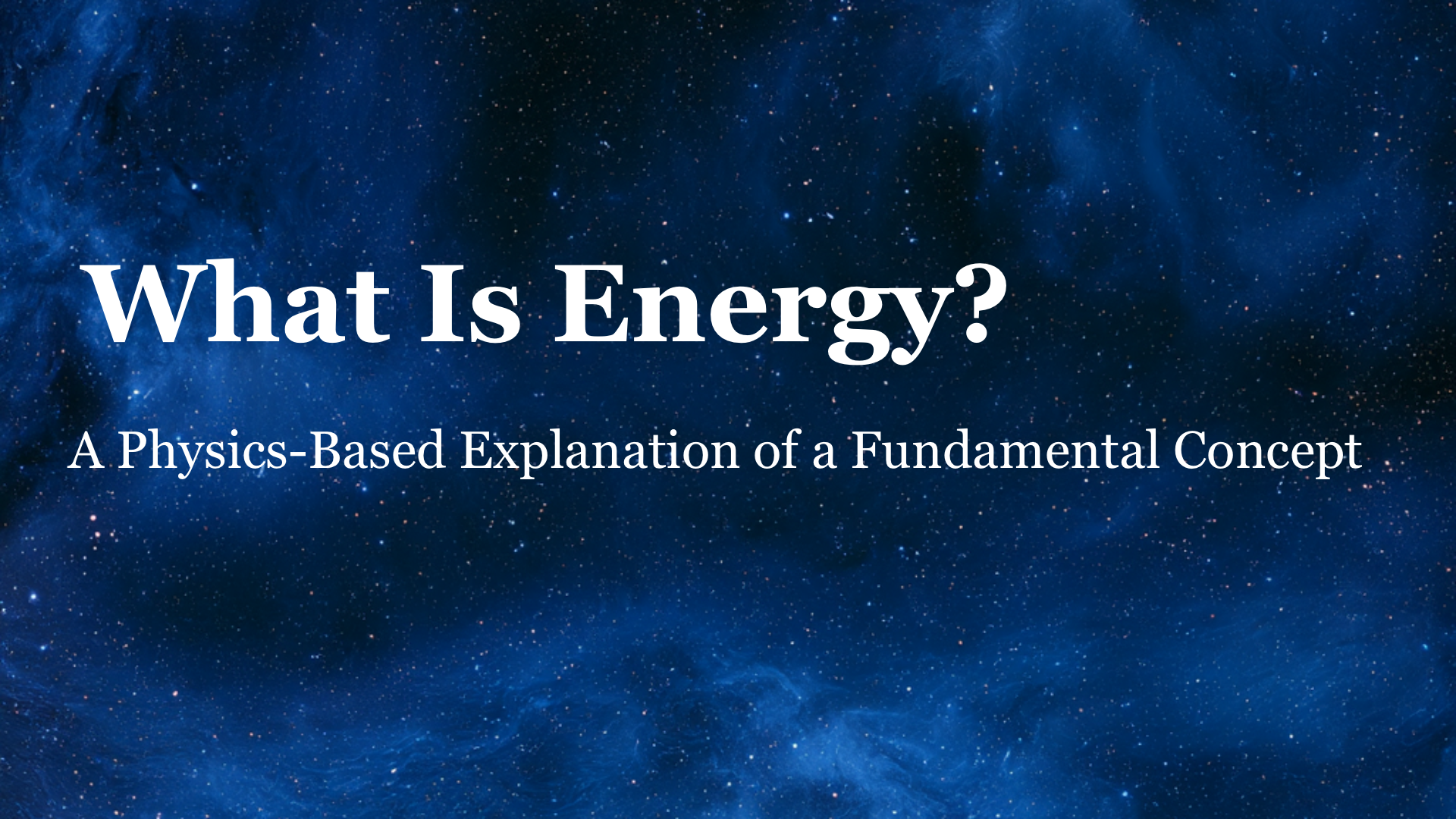
Energy is one of the most important concepts in physics because it helps explain how and why things happen in the physical world. If you are interested in understanding how objects move, how changes occur, and how the world around us operates, learning what energy is is a great place to start.
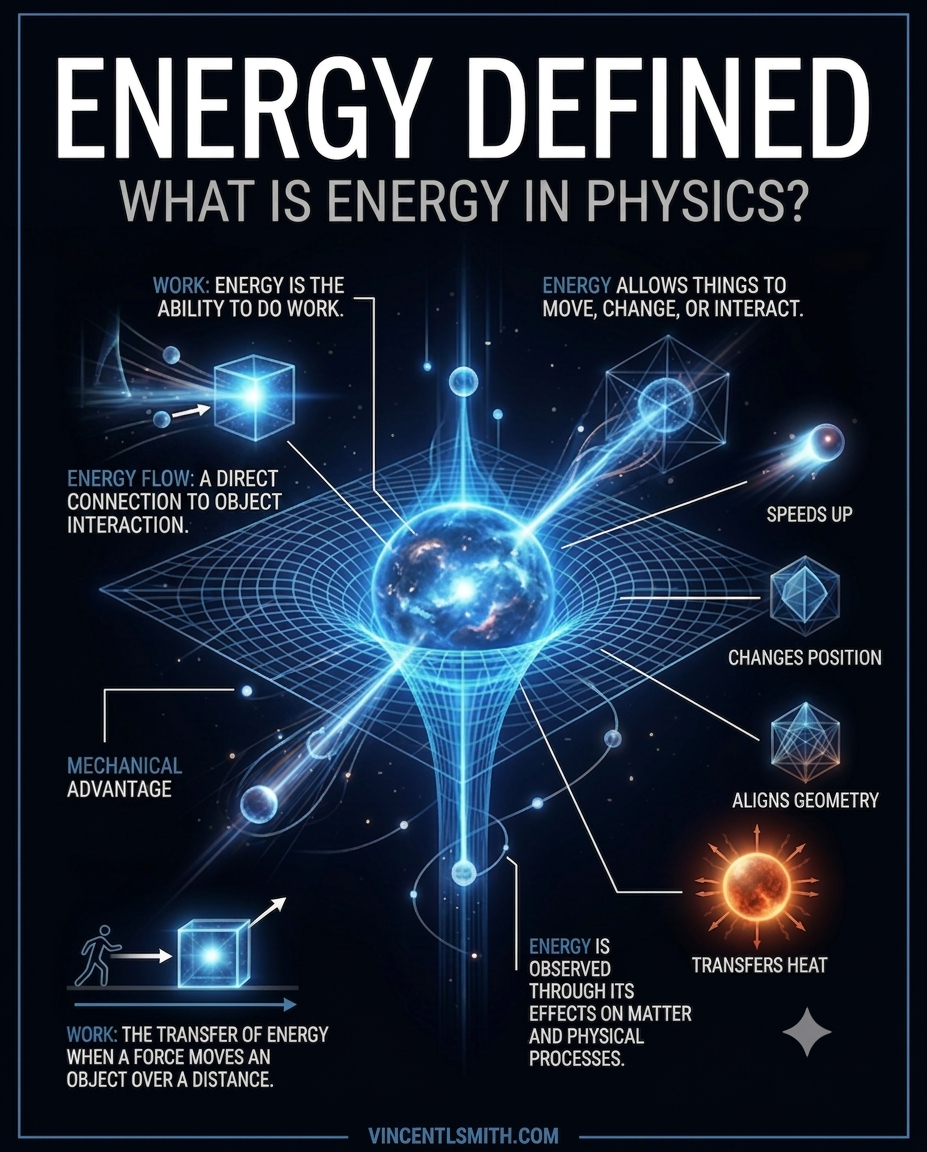
In physics, energy is defined as the ability to do work. Here, the word work is used as a specific scientific term. It does not mean effort in the everyday sense. Instead, work refers to the transfer of energy that occurs when a force moves an object over a distance. For example, pushing a box across the floor involves work because energy is being transferred to move the object.
Put simply, energy is what allows things to move, change, or interact. Any time an object speeds up, slows down, changes position, or transfers heat, energy is involved. Even though we cannot see energy directly, we can observe its effects through these physical changes.
Energy is a fundamental part of physics because it is always present when something happens in the physical world. It helps describe how matter behaves and how different physical processes occur. Because the idea of energy can feel abstract at first, this article will break it down into clear, simple concepts to build a strong foundational understanding.
Types and Forms of Energy
Kinetic Energy
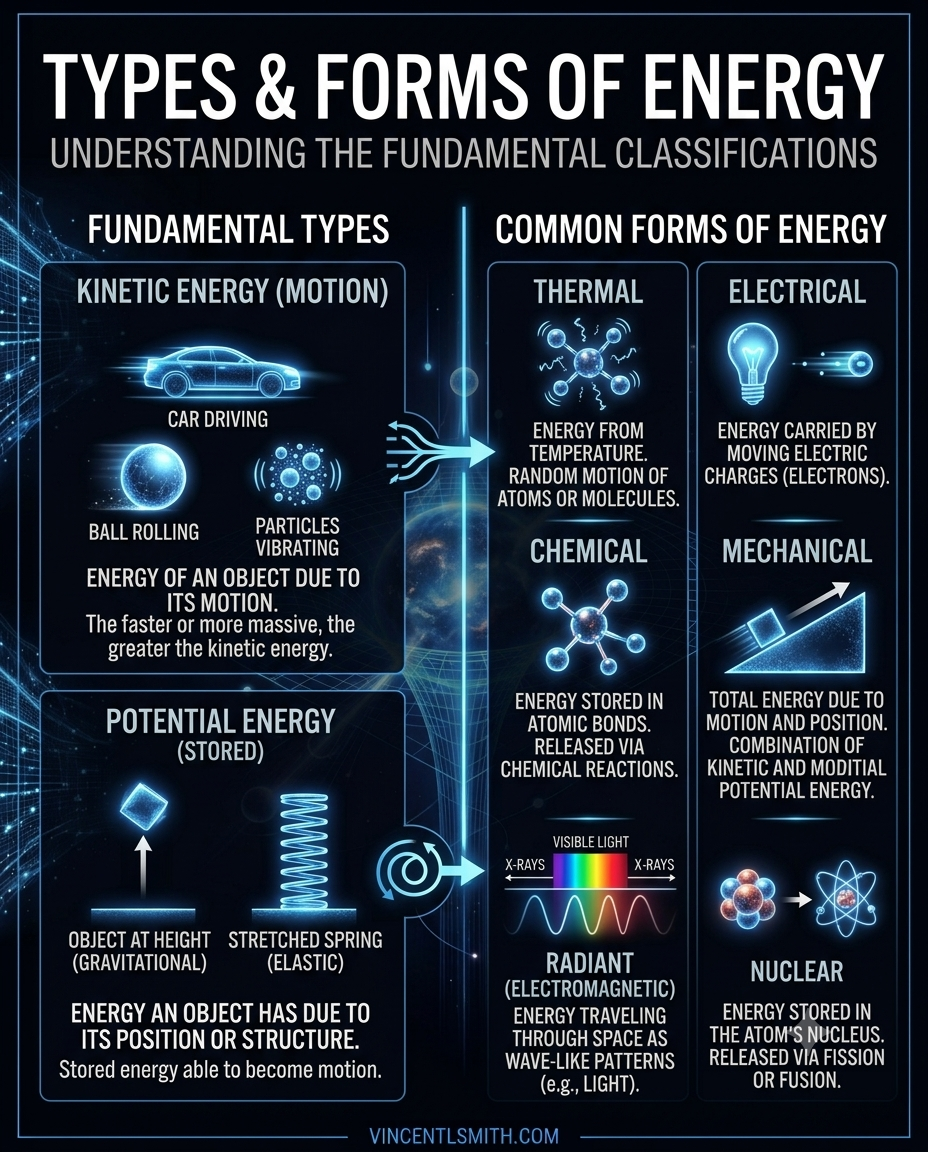
Kinetic energy is the energy an object has due to its motion. Any time an object is moving—whether it is a car driving, a ball rolling, or even particles vibrating—it possesses kinetic energy. The faster an object moves or the more mass it has, the greater its kinetic energy. In physics, kinetic energy helps explain how motion occurs and how energy is transferred between moving objects.
Potential Energy
Potential energy is the energy an object has because of its position or structure. Unlike kinetic energy, which depends on motion, potential energy is stored and has the ability to become motion under the right conditions. For example, an object held at a height has gravitational potential energy because it can fall, and a stretched spring has potential energy because it can snap back into place. In physics, potential energy helps explain how energy can be stored and later converted into kinetic energy when a change occurs.
Common Forms of Energy
Thermal Energy
Thermal energy is the energy that comes from the temperature of a substance. It is caused by the random motion of atoms or molecules that make up matter. Even if an object appears still, its particles are always moving—vibrating in solids and moving more freely in liquids and gases. The higher the temperature of a substance, the faster its particles move, and the more thermal energy it has.
Mechanical Energy
Mechanical energy is the total energy an object has due to its motion and position. It is the combination of kinetic energy (energy of motion) and potential energy (stored energy), though an object can have one or the other and still have mechanical energy. For example, a moving car has kinetic energy, a lifted object has potential energy, and both are forms of mechanical energy. In physics, mechanical energy helps describe how objects move and how energy is transferred and conserved in physical systems involving motion and position.
Chemical Energy
Chemical energy is the energy stored in the bonds between atoms that can be released and used when a chemical reaction occurs. Its main function is to store energy in a stable form and then release it when those bonds are broken and rearranged. This release of energy can then be used to do work, produce heat, or power processes in both natural and man-made systems. For example, the chemical energy in fuel is released to power engines, and the chemical energy in food is converted by the body to support movement and biological functions.
Electrical Energy
Electrical energy is the energy carried by moving electric charges, most commonly electrons. It occurs when these charges flow through a material that allows movement, such as a wire or other conductor. The amount of electrical energy transferred depends on how many charges are moving and how much energy each charge carries. Electrical energy is widely used in everyday life, powering devices, lighting homes, and enabling modern technology by transferring energy efficiently from one place to another.
Radiant (Electromagnetic) Energy
Radiant (electromagnetic) energy is energy that travels through space as a wave-like pattern, such as light. Unlike many other forms of energy, it does not need a material to move through, which is how energy from the Sun reaches Earth through empty space. This energy moves as electromagnetic waves, meaning electric and magnetic effects working together to carry energy from one place to another. Radiant energy includes visible light, infrared energy (which we feel as heat), and ultraviolet energy (which can affect the skin), as well as other forms such as radio waves and X-rays that we cannot see but can detect using scientific instruments.
Nuclear Energy
Nuclear energy is the energy stored in the nucleus of an atom, which is the dense center made up of protons and neutrons. This energy can be released when the nucleus is changed through processes such as splitting atoms (fission) or combining them (fusion). When these changes occur, a large amount of energy is released, often in the form of heat and radiation. Nuclear energy is used in power plants to generate electricity and is also the source of the energy produced by the Sun.
Understanding the Law of Conservation of Energy
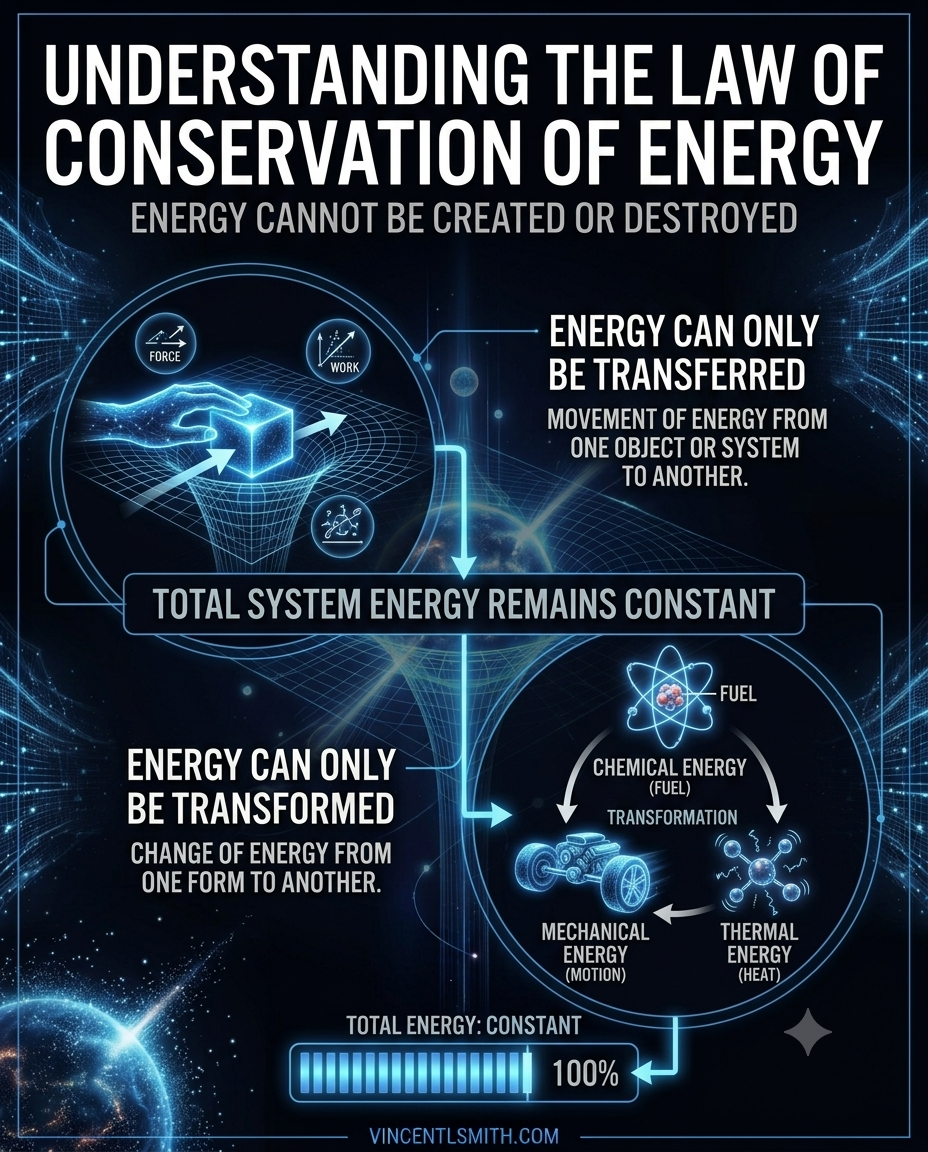
The law of conservation of energy states that energy cannot be created or destroyed. Instead, energy can only be transferred or transformed from one form to another. This means that the total amount of energy in a system remains constant, even as it changes forms.
For example, when fuel is burned in a car, chemical energy is converted into mechanical energy (motion) and thermal energy (heat). Although the form of the energy changes, the total amount of energy remains the same. This principle is fundamental in physics because it helps explain how energy moves and changes in all physical processes.
The Function of Energy: Energy Transfer and Energy Transformation
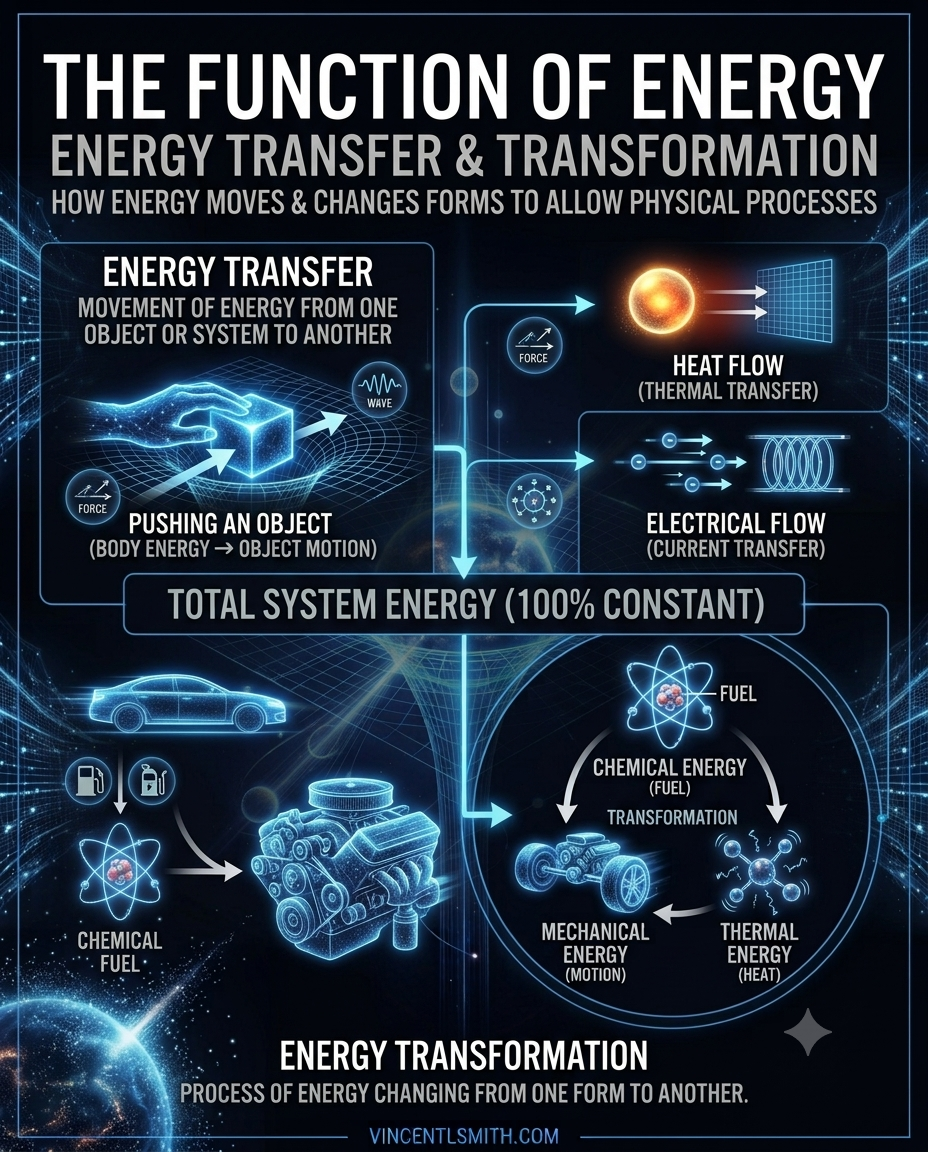
Energy functions by moving and changing in ways that allow physical processes to occur. This happens through two main processes: energy transfer and energy transformation. Understanding these processes helps explain how energy moves through the world and how it is used to create motion, heat, and other effects.
Energy transfer refers to the movement of energy from one object or system to another. For example, when you push an object, energy is transferred from your body to the object, causing it to move. Energy can also be transferred in other ways, such as through heat or electrical flow.
Energy transformation refers to the process of energy changing from one form to another. For instance, chemical energy in fuel can be transformed into mechanical energy to move a car and thermal energy as heat. Although the form of the energy changes, the total amount of energy remains the same, following the law of conservation of energy.
Fundamental Energy Formulas
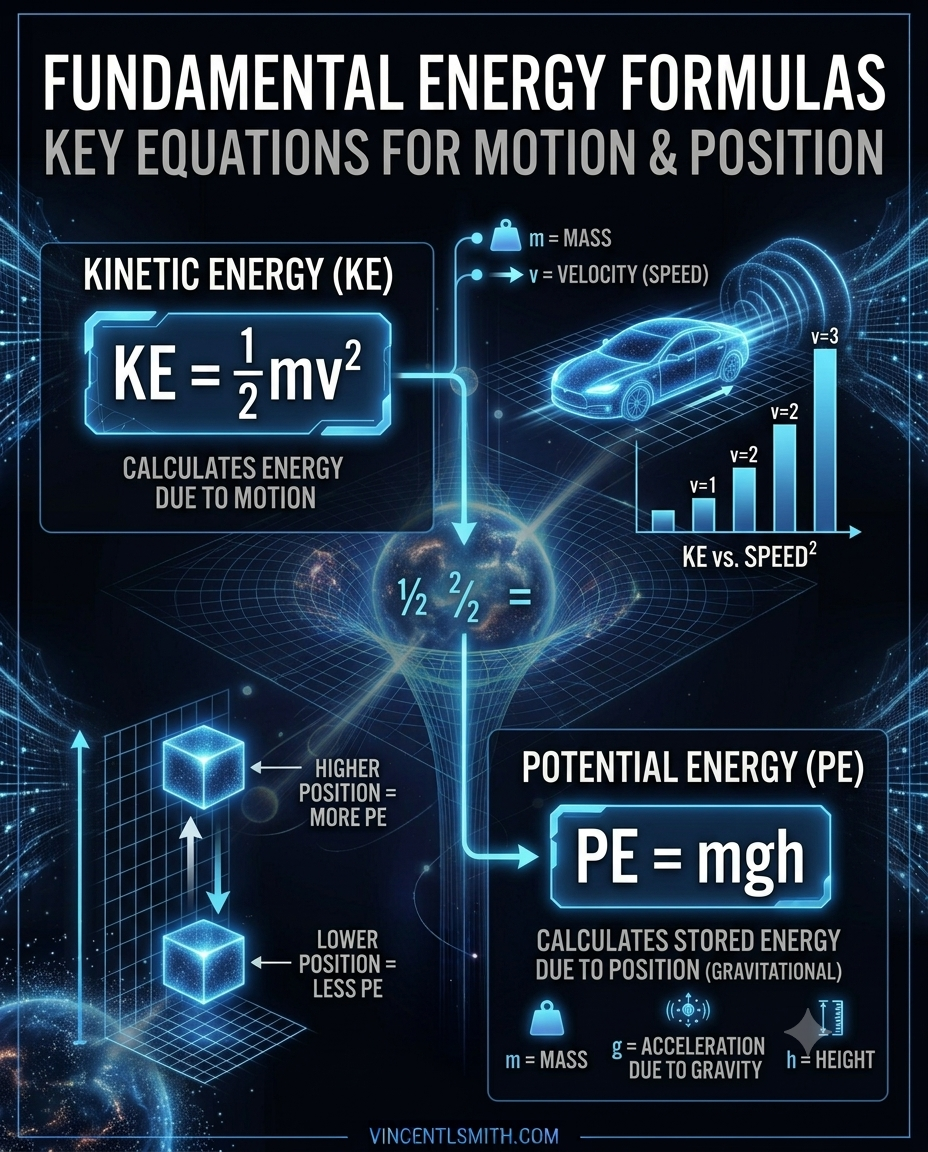
In physics, energy can be described and measured using simple formulas that show how it depends on motion and position. Two of the most important formulas for beginners are those for kinetic energy and potential energy.
Kinetic energy is calculated using the formula KE = ½mv², where m represents mass and v represents velocity (speed). This formula shows that an object’s kinetic energy increases with both its mass and the square of its speed, meaning speed has a strong effect on how much kinetic energy an object has.
Potential energy, specifically gravitational potential energy, is calculated using the formula PE = mgh, where m is mass, g is the acceleration due to gravity, and h is height. This formula shows that the higher an object is positioned, the more potential energy it has due to gravity.
How Energy Is Measured
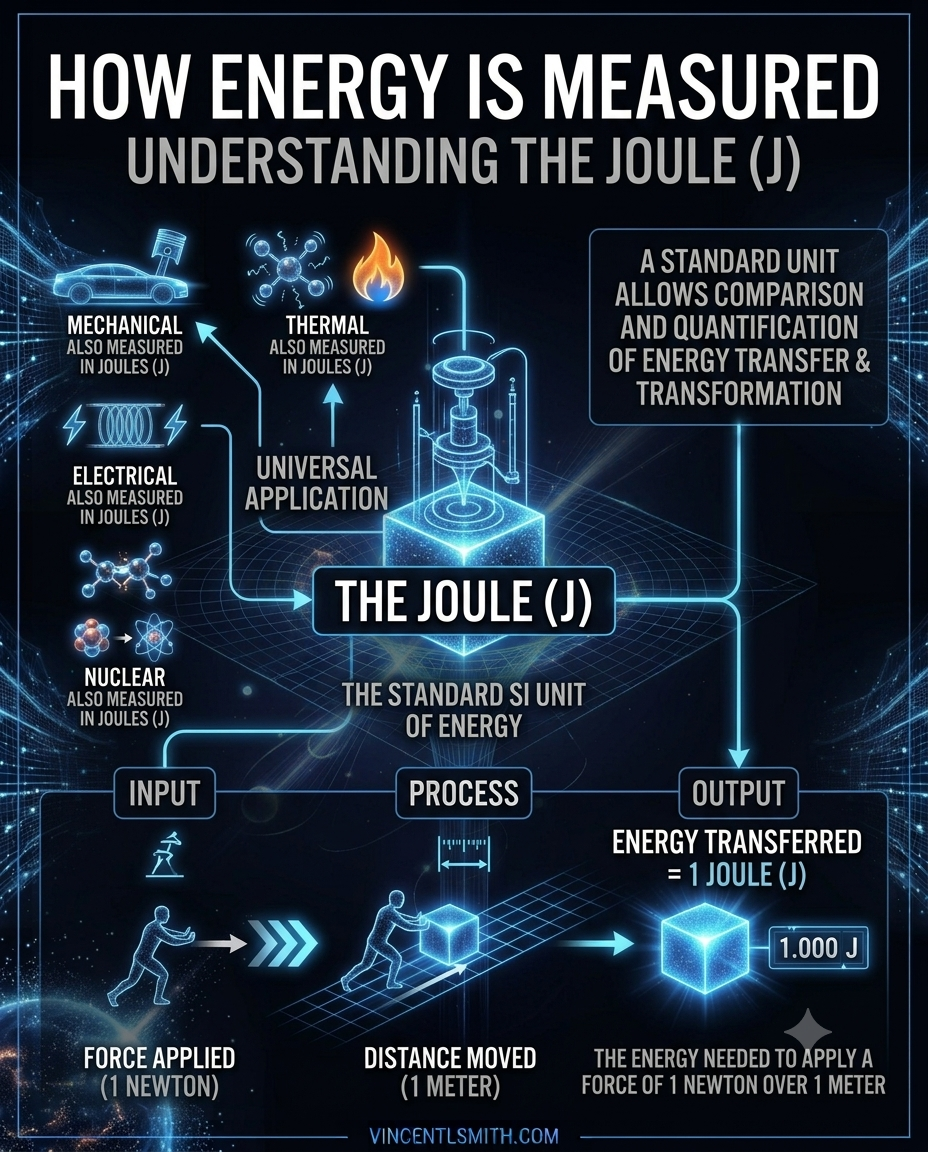
In physics, energy is measured in units called joules (J). A joule represents a specific amount of energy transferred or used, and it is the standard unit for energy in the International System of Units (SI). One joule can be understood as the amount of energy needed to apply a force of one newton over a distance of one meter.
Joules are used to measure all forms of energy, including mechanical, thermal, electrical, chemical, and more. Using a standard unit like the joule allows scientists and engineers to compare different types of energy and understand how energy is transferred and transformed in physical systems.
Conclusion
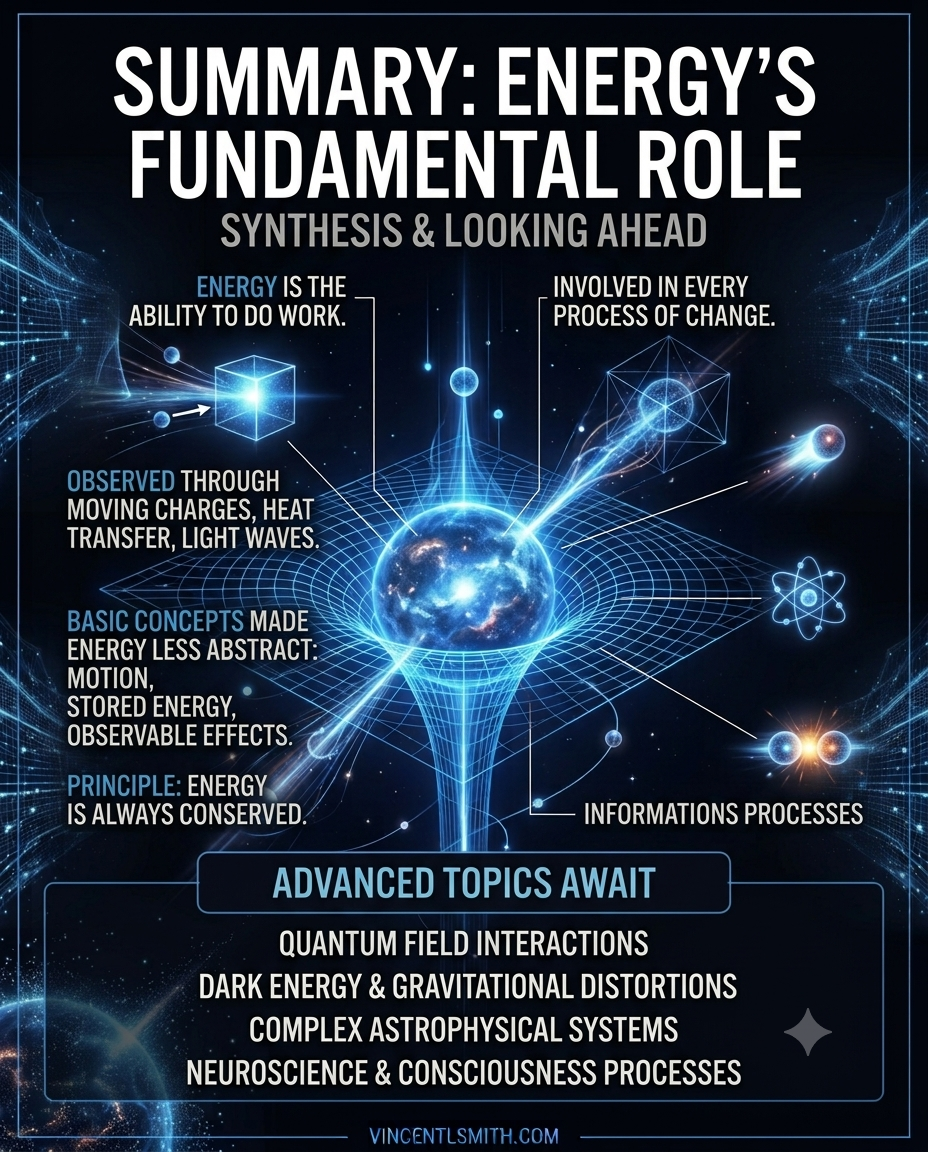
Energy is a fundamental concept that helps explain how the physical world works. From motion and position to heat, electricity, and light, energy is involved in every process that causes change. By understanding energy as the ability to do work and recognizing how it exists in different forms, we can begin to see how physical systems operate and interact.
Throughout this article, we explored the basic types and forms of energy, how energy is transferred and transformed, and the principle that energy is always conserved. While the concept of energy can seem abstract at first, breaking it down into simple ideas—such as motion, stored energy, and observable effects—makes it easier to understand.
This foundational understanding of energy provides a starting point for exploring more advanced topics in physics. As you continue learning, you will see how these basic principles apply across a wide range of scientific concepts, helping to explain everything from everyday motion to complex systems in the universe.